Gaaeng Supper Club Episode 38 | Lost in Translation
Lost in Translation | Gaaeng Supper Club
Ep.38 : Thai Japanese
From Chef Pao:
“It’s time once again for Lost in Translation.
Last year, we explored the space between Thai and Korean cuisine. Not fusion, but a conversation between two food cultures shaped by similar techniques, shared instincts, and parallel ways of eating.
This year, we return with Thai-Japanese.
Expect sushi rolls, ramen and sashimi?
Nah… we’re going much deeper than that
This dinner dives into the wisdom of preservation, fermentation, and survival through food. Thai cuisine was shaped by tropical heat, bold spices, and techniques built to keep ingredients alive in an unforgiving climate. Japanese cuisine grew through seasonality, restraint, and centuries of mastering preservation through long winters
Two cuisines that almost sit at opposite ends of the spectrum when it comes to spice, yet somehow meet perfectly through fermentation, seafood, rice, smoke, and patience
This is not about combining dishes. It’s about discovering where these food cultures naturally overlap, and what new flavors can emerge when they meet in the middle…
Join us for Lost in Translation: Thai Japanese”
An Explanation of Tonight’s Sake Menu…
A history lesson of preservation, fermentation and celebration
At first glance, Thai and Japanese cuisine seem to speak different languages. One loves tropical heat and bold spice and the other values restraint and seasonality. But both food cultures were built answering the same questions: How do we preserve our harvest? How do we honor the sea? How do we transform rice into something greater than itself?
Tonight, I picked sake bottles that shine a light on the innovation of rice through sake history, including sake from regions of Japan that resemble Thailand like the tropical prefectures of Kyushu and showcases the coastal prefecture of Ishikawa that has a rich history with charcoal and seafood preservation. The Noto and Kaga regions of Ishikawa, became well known for their high quality charcoal during the Muromachi period, an era where Bodaimoto-style sake was being produced.
Innovating rice, celebrating smoke and preserving the harvest are all themes that Japan and Thailand share intimately. Both cultures honor the same truth that microbes transform perishable ingredients into foods and drinks that are more stable, more nutritious, and more flavorful. The sake you will drink tonight has acid, texture, and a little funk. Enjoy drinking your history lesson.
A quick sake history timeline:
1400s (Muromachi Period) → Bodaimoto developed by monks at Shōryaku-ji Temple. This is one of the earliest documented yeast starter methods and relied on naturally cultivated lactic acid bacteria
1600s (Edo Period) → Kimoto emerges as a more systematic and reliable brewing method, using the labor-intensive pole-mashing process to create a healthy fermentation starter
Early 1900s (Meiji Period) → Yamahai simplifies Kimoto by eliminating the pole-mashing step while still relying on natural lactic acid development in the fermentation starter
1910 onward → Sokujo becomes the dominant modern method by adding lactic acid directly, dramatically reducing time and risk instead of allowing it to develop naturally
The Menu.
Welcome Beverage
Heiwa Shuzo Lemon Sours
Starters
Saaeng Wa Bpla | แสร้งว่าปลาญี่ปุ่น
Kombu cured Madai, ume kosho, Thai herbs 🌶️
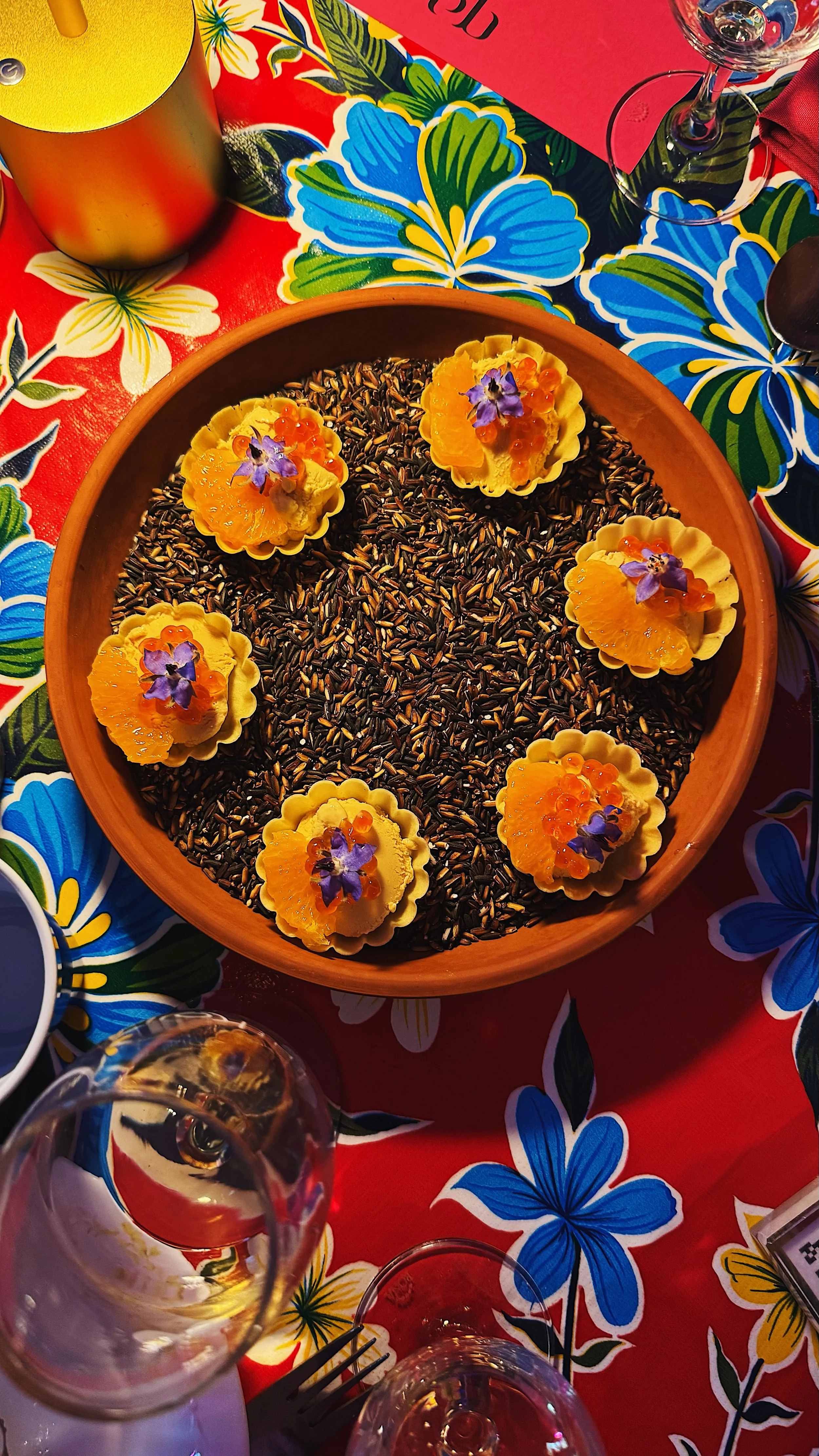
Lohn Dtub Bpla | หลนตับปลา
Ankimo Lohn relish ice cream, grand marnier, ikura, mandarin, crispy Thai tartlet
Khao Ream Feun | ข้าวแรมฟืนดาชิ
Shan style chickpea tofu with tomato dashi dressing, peanut relish, fried garlic
Sake Pairings
Terada Honke Bodaimoto, Chiba
Kameman Shuzo Genmaishu, Kumamoto
Family Style
Nam Prik Tua Nao | น้ำพริกนัตโตะ
Natto relish with grilled hamachi Kama, assorted veggies
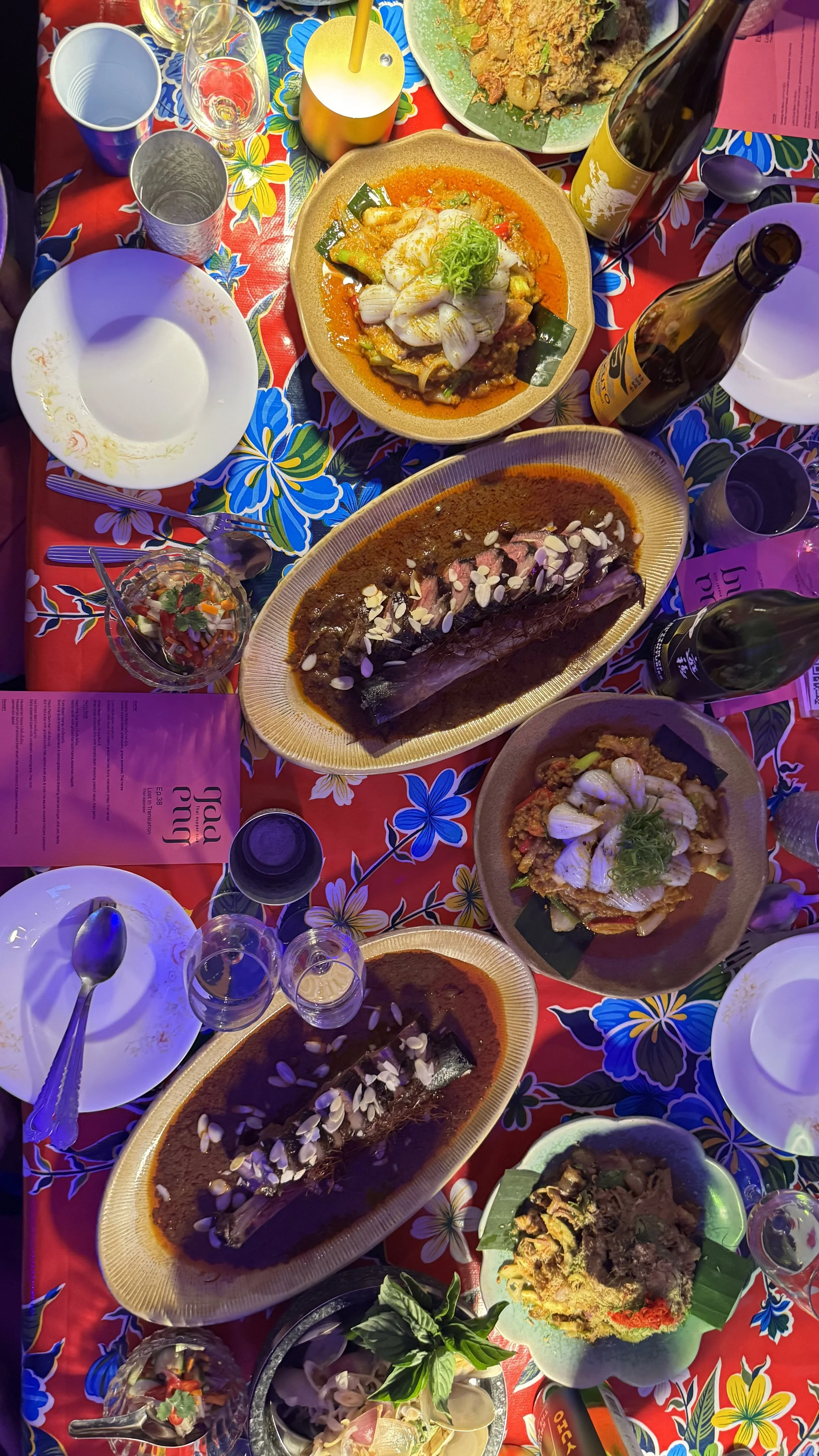
Yum Bped Yaang | ยำเป็ดรมควัน
Shio koji duck breast, calamansi & lemongrass kosho dressing, charred longan, chili jam, herbs 🌶️
Meuk Pad Sam Kai | หมึกผัดสามไข่
Stir fried yuba with grilled cuttle fish, salted duck yolk & crab roe sauce, roasted chili jam, karasumi
Hoi Dtom Sato | หอยต้มสาโท
Sato steamed clam with umeboshi, lemongrass, Thai chili
Massaman Neua | มัสมั่นเนื้อมิโสะ
Massaman curry of smoked beef short ribs with coconut & peanut miso, almond, raisin, yamakobo ajaad
Sake Pairings
Hakuto Junmai Ginjo ‘Deep Faith’ Junmai Ginjo, Ishikawa
Yuho Rhythm of the Centuries Kimoto Junmai, Ishikawa
Tengumai ‘Dance of the Demon’ Yamahai Junmai, Ishikawa
Dessert
I-Dtim | ไอติมกะทิ
Coconut, sake kasu and toasted rice powder ice cream
Cake Mun Whaan | เค้กมันหวาน
Yaki Imo cream & pandan Katsutera cake
Sake Pairing
Brooklyn Kura ‘Lake Effect’ Nigori
A very modern and unique nigori that uses amazake instead of sake kasu to create the cloudy appearance and texture. Modern rice innovation at its finest. Amazake is a traditional non-alcoholic fermented rice drink made using steamed rice, water and koji.